
How much hearing aids cost in Uganda is the first question almost everyone asks, and the hardest one to get answered. Search for hearing aid prices and you will find marketplace listings, imported gadgets and a lot of silence from actual clinics. Very few hearing care providers in this country publish anything at all about cost.
We think that is a mistake. People deserve to understand what they are being asked to pay for before they walk into a consultation. This article explains how hearing aids are priced, what a fair price should include, and how to tell a genuine medical device from an amplifier that will end up in a drawer.
The short version
- Hearing aids are priced in tiers based on how well they handle background noise, not on how loud they go.
- The device is only part of what you pay for. The hearing test, the fitting, the programming and the follow-up matter just as much.
- A device that has not been programmed to your own test results is an amplifier, not a hearing aid.
- Two hearing aids work considerably better than one when both ears are affected.
- A hearing aid lasts around five years, so judge the price across that period.
Why so few clinics publish hearing aid prices
Part of it is commercial caution. Part of it is that a hearing aid genuinely is not a fixed-price product in the way a phone is. The right device depends on the shape of your hearing loss, how much of your day is spent in noise, how well you can handle small objects, and what you actually need to hear.
But there is a difference between “we cannot quote before we test you” and refusing to explain how pricing works at all. The second leaves people guessing, and guessing is how someone ends up spending money on a device from an online seller that makes everything louder and nothing clearer.
What you are actually paying for
When you buy a hearing aid from a clinic rather than a shop, the price covers considerably more than the hardware in the box.
The diagnostic hearing test
Before anything is recommended, hearing has to be measured properly. That means testing the outer, middle and inner ear so we know the type of hearing loss, not just how severe it is. Conductive hearing loss often has a medical fix and may not need a device at all. Sensorineural loss usually does. Guessing between the two wastes money.
The fitting and programming
This is the part people underestimate. A hearing aid is programmed against your audiogram, lifting the specific frequencies you have lost and leaving alone the ones you still hear well. Two people with the same device and different programming have completely different experiences of it.
The ear mould, where one is needed
Made from an impression of your own ear canal. A poor fit causes whistling and discomfort, and it is one of the most common reasons a hearing aid stops being worn.
The follow-up
Nobody gets the settings perfect on day one, because the brain needs time to readjust to sounds it has not processed in years. Sounds you had stopped noticing come back all at once and can feel overwhelming. Adjustments over the following weeks are what turn a device you tolerate into a device you forget you are wearing.
The technology tiers, explained without the jargon
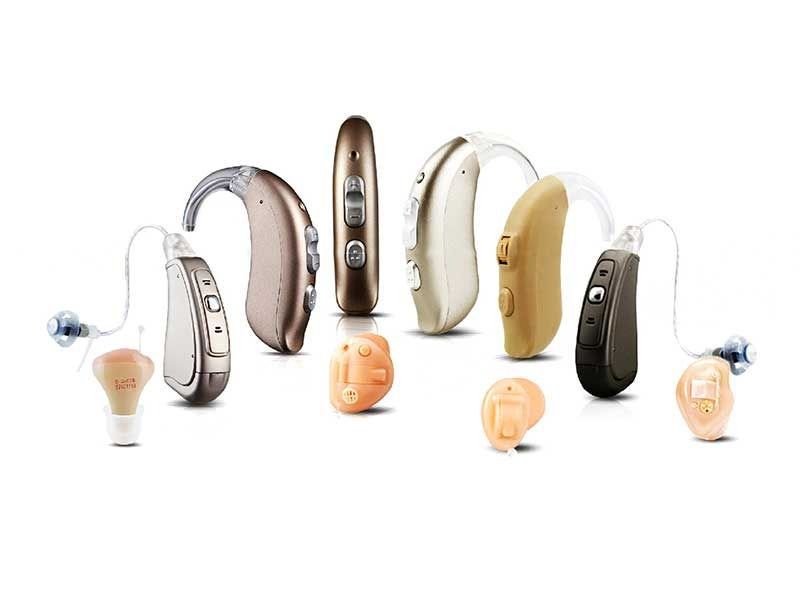
Every tier of hearing aid makes sound louder. That is the easy part. What separates them is how well the device copes when there is more than one thing to listen to.
| Tier | What it handles well | Who it usually suits |
|---|---|---|
| Essential | One-to-one conversation in a quiet room | Someone mostly at home and rarely in crowds |
| Standard | Everyday use, including some background noise | Most people, most of the time |
| Advanced | Meetings, church, restaurants, group conversation | People still working or socially active |
| Premium | Complex, shifting noise, music and travel | People in demanding listening environments daily |
Paying for a premium device you do not need is wasted money. So is buying an essential device when you spend your working life somewhere noisy, because you will be disappointed and stop wearing it. An honest recommendation depends on your test results and your daily life, which is why the conversation has to happen after the test rather than before it.
What a fair price should include
Before you agree to anything, get clear on what is bundled. A reasonable package covers the hearing assessment, the fitting appointment, programming to your audiogram, a custom ear mould where one is needed, follow-up adjustments for a defined period, and the manufacturer warranty. Ask how long the warranty runs, whether follow-up visits cost extra, and what happens if the device needs repair.
A hearing aid with no follow-up is a purchase. A hearing aid with follow-up is treatment.
One hearing aid or two?
If hearing loss affects both ears, two devices work considerably better than one. You need both ears to work out which direction a sound came from, and to separate a voice from the noise around it. Wearing one device in a busy room leaves the brain with far less to work with.
That said, if only one ear is affected, one device is the right answer, and any clinic telling you otherwise is selling rather than advising.
Judging the cost over five years, not one afternoon
A well-maintained hearing aid lasts around five years. Divided across that time the figure looks rather different from the number on the quotation. It is still a significant purchase for most families here, and we are not going to pretend otherwise. But the comparison worth making is not device versus no device. It is device versus five more years of missing what people say.
Untreated hearing loss carries costs of its own. Work gets harder. Conversations get avoided. Family members become frustrated repeating themselves, and the person with the loss quietly withdraws. The World Health Organization estimates that unaddressed hearing loss costs the global economy hundreds of billions of dollars each year, and that the large majority of it goes untreated.
Why the cheap devices sold online are not a saving
The products marketed online as budget hearing aids are almost always simple amplifiers. They raise the volume of everything in the room by the same amount, including the fan, the traffic and the chair scraping across the floor. They are not programmed to anyone’s hearing loss, because they cannot be.
Most people who buy one wear it for a few weeks and give up. Worse, amplifying frequencies you still hear normally is uncomfortable and, at high volume over time, is not good for the hearing you have left.
What to ask before you buy
- Can I see my audiogram and have it explained to me?
- Why this device rather than a cheaper or a more expensive one?
- Are the fitting and programming included?
- How many follow-up adjustments are included, and over what period?
- What is the warranty, and who handles a repair?
- Can I come back if it does not sound right?
Common questions about hearing aid cost in Uganda
Can I get a price over the phone?
We can talk you through what each tier includes and what drives the difference. We will not responsibly quote for a specific device until we have tested your hearing, because the recommendation depends on what the test shows.
Do you offer a payment plan?
Talk to us about your situation when you call. It is a conversation worth having rather than assuming the answer is no.
How long does the whole process take?
The hearing assessment takes around an hour and results are explained the same day. Fitting happens at a later appointment once the device and any ear mould are ready.
I already have a hearing aid that never sounded right. Can you help?
Often, yes. Bring it in with any paperwork you have. In a lot of cases the device is perfectly good and was simply never programmed to the wearer’s actual test results.
Does a more expensive hearing aid make sound louder?
No. Every tier can make sound loud enough. The extra cost buys better handling of background noise, not more volume. You can see the full range we supply on our hearing aids page.
Start with a hearing test
We will measure your hearing properly, explain the results the same day, and quote for the device we would actually recommend. Our clinic is at Kings Tower, Nsubuga Road, Kabalagala.
Call +256 748 626218 | Book an appointment